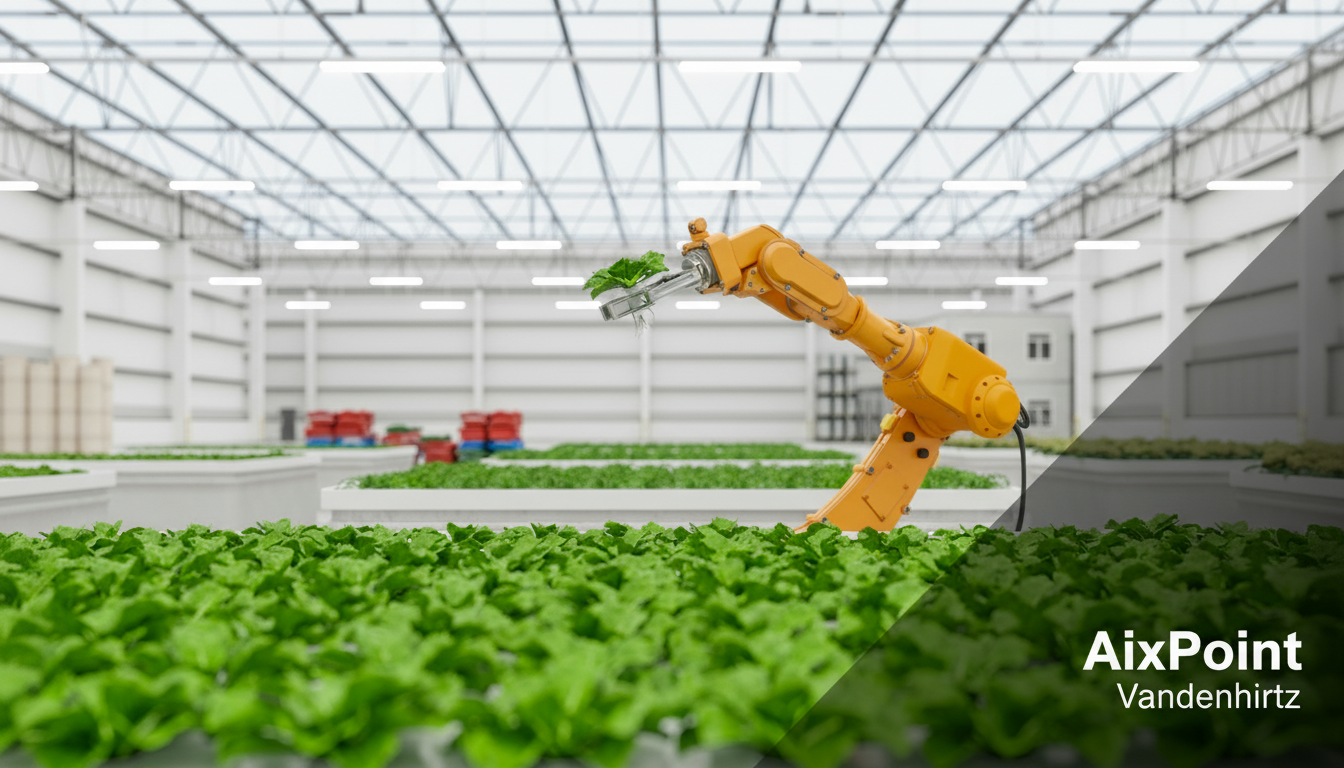

Vertical-farming survivors double down on leafy greens - and finally hit unit economics
Two years after the sector's reckoning, the surviving CEA operators - Infarm 2.0, Néboda, Plenty, and Babylon - converge on a narrower playbook: leafy greens, retail-adjacent micro-farms, and brutal energy discipline. Some are reporting positive contribution margin for the first time.
· CEA / Vertical Farming · Europe · 4 min
The 2024 vertical-farming bloodbath wiped out roughly 60% of European CEA operators, with Bowery, Plenty (US), and Infarm (1.0) all entering insolvency or restructuring. The survivors that emerged in 2025 - most notably Infarm 2.0 (now Berlin-based, restructured around modular micro-farms), Spain's Néboda Farms, Plenty's reorganised US operation, and France's Babylon - have converged on a remarkably narrow playbook.
First, leafy greens only. Tomatoes, strawberries, and other fruit-bearing crops are quietly off the roadmap; the energy-per-kg math doesn't work outside extreme-climate edge cases. Second, retail-adjacent footprints: 200-600 m² container or in-store farms, not 5,000 m² warehouses. Third, ruthless energy contracts - most operators now buy power on day-ahead markets and shift growth cycles to off-peak hours, cutting energy cost-of-goods by 30-45%.
The financial result is finally coherent. Néboda Farms reported its first positive contribution margin in March 2026 (€1.40/kg basil at retail, vs €0.95 fully-loaded cost), confirmed by their auditor. Infarm 2.0 claims operational break-even on 12 of 17 active sites. Plenty's US lettuce operation projects gross-margin positivity by Q3 2026.
Investor sentiment remains cautious - and rightly so. The category will not return to the $5B/year peak of 2021-2022. But a smaller, profitable vertical-farming industry of perhaps $400-600M in annual revenue is now visible by 2027, anchored by retail-supplied micro-farming for premium leafy greens and herbs.